
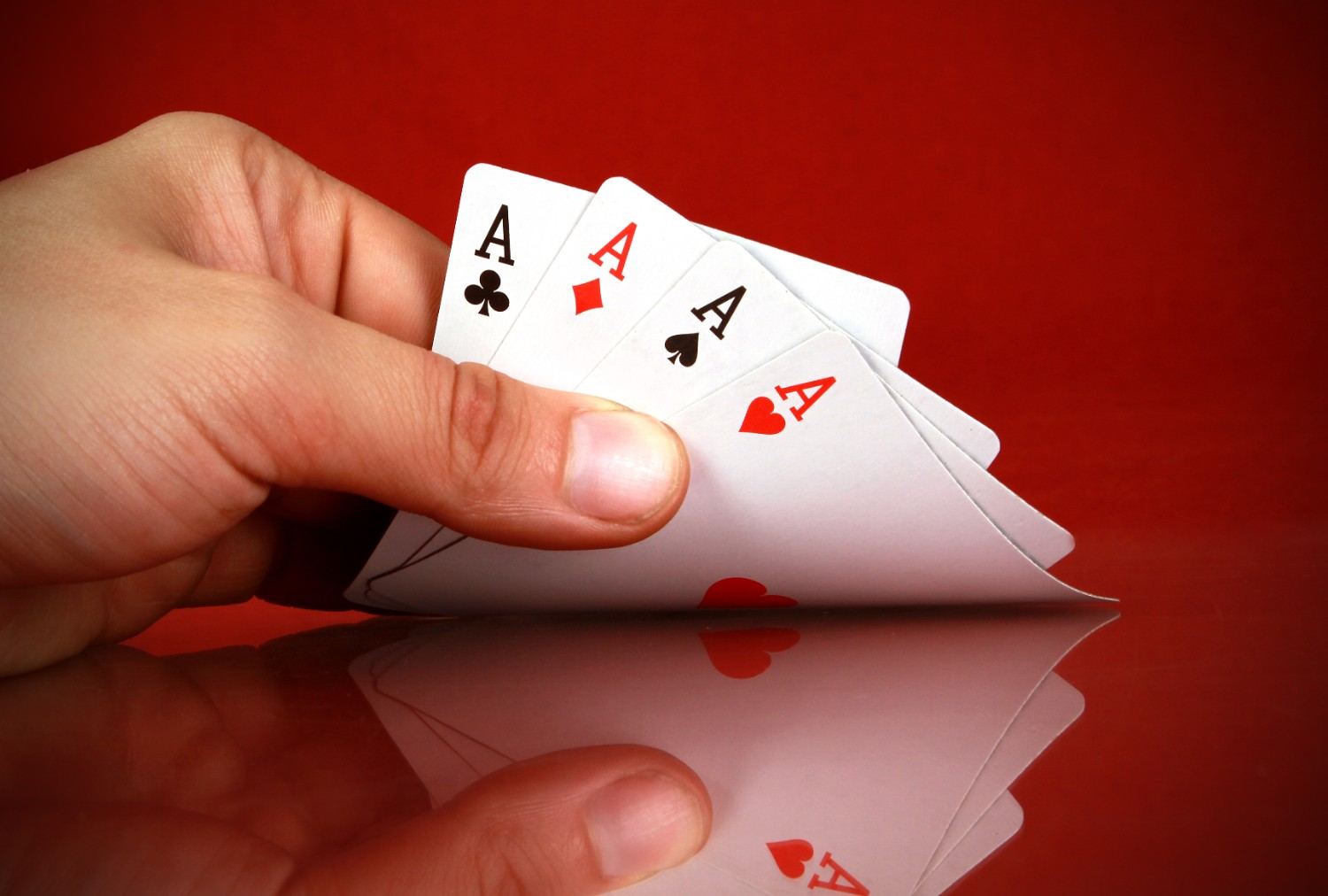
AI Andar Bahar Predictor : Machine Learning Result Pakad Sakti ?
Last 500 Andar Bahar results AI ko de diye.
Model ne history analyse ki, patterns nikale, aur screen par prediction aa gaya:
“Next Result: ANDAR — Confidence 78%.”
Dekhne mein kaafi powerful lagta hai.
After all, AI stock prices analyse karti hai, images recognise karti hai, fraud detect karti hai, language understand karti hai. Toh:
“Andar ya Bahar predict karna AI ke liye kya badi baat hai?”
But machine learning ka ek basic rule hai:
AI past data se pattern learn kar sakti hai, lekin sirf tab useful prediction karegi jab past data mein future ke baare mein genuine information ho.
Agar next result ke baare mein historical sequence ke andar reliable signal hi nahi hai, toh sophisticated AI bhi random noise ko pattern samajh sakti hai.
Machine Learning Actually Karti Kya Hai?
Imagine dataset:
| Round | Previous Results | Next Result |
|---|---|---|
| 101 | A, B, A, A, B | A |
| 102 | B, A, A, B, A | B |
| 103 | A, A, B, A, B | B |
A machine-learning model can search for relationships such as:
Does A-A-A usually lead to B?
Does alternating A-B-A-B tend to continue?
Does one side become more common after a long gap?
Do the previous 5 results matter more than the previous 20?
More advanced models can analyse hundreds or thousands of combinations that a human would never manually check.
That’s genuinely useful computational power.
But there is a catch:
finding a historical relationship is not the same as discovering a predictive relationship.
What If Historical Results Contain No Useful Signal?
Let’s create a simplified hypothetical example.
Imagine a process where every new round is generated independently and has:
P(A) = 50%
P(B) = 50%.
Now give an AI one million previous results.
It can calculate:
streak lengths,
alternating sequences,
moving averages,
last-10 frequencies,
last-100 frequencies,
thousands of pattern combinations.
But if the next result is genuinely independent of all previous results, historical A/B sequence contains no predictive signal about the next outcome.
More data helps the AI understand the history more accurately.
It does not magically create information that isn’t there.
It’s similar to giving an AI the previous one million fair coin tosses and asking:
“Head ya Tail next?”
The AI can analyse those million tosses perfectly.
That doesn’t mean the million-and-first toss becomes predictable.
This is a hypothetical illustration, not a claim that every Andar Bahar implementation uses independent 50/50 rounds.
AI Ka Sabse Bada Risk: Random Noise Ko Pattern Samajhna
Suppose we generate random-looking history:
A B A A B B A A A B A B B B A…
Now test thousands of rules.
Eventually you may discover something like:
“Whenever B-A-A-B appears after an odd-numbered round, next result was A 72% of the time.”
Wow.
72% sounds impressive.
But maybe that relationship occurred purely by chance in the historical sample.
This is called overfitting.
The model doesn’t learn a real mechanism. It memorises quirks in the training data.
Then new results arrive:
Prediction 1: wrong.
Prediction 2: right.
Prediction 3: wrong.
After hundreds of fresh predictions, that impressive historical 72% may collapse towards the ordinary baseline.
That’s why:
“AI achieved 80% accuracy on old results”
is much less impressive than:
“A frozen model was tested prospectively on previously unseen results and consistently beat a proper baseline.”
Training Data Aur Test Data Ko Separate Karna Zaroori Hai
Suppose you have 10,000 historical rounds.
A weak test would train the model and evaluate it using overlapping or reused data.
A better experiment would separate data chronologically.
For example:
| Dataset | Rounds | Purpose |
|---|---|---|
| Training | 1–7,000 | Model learns patterns |
| Validation | 7,001–8,500 | Model settings are selected |
| Untouched Test | 8,501–10,000 | Final evaluation |
The model should not use the final test outcomes while learning.
Even better, freeze the model and record predictions for genuinely future rounds:
Prediction first → result later.
This prevents someone from changing the model after seeing which predictions failed.
“78% AI Confidence” Ka Actual Meaning Kya Hai?
A predictor screen may display:
ANDAR — 78% Confidence
But where did 78% come from?
Possibilities include:
a genuine calibrated probability estimate,
a model score converted into a percentage,
a historical pattern frequency,
or simply a number displayed by the interface.
The word confidence itself doesn’t prove accuracy.
A useful way to evaluate probability predictions is calibration.
If a model makes hundreds of predictions labelled around 70% probability, approximately 70% of those outcomes should occur if the probabilities are well calibrated.
If its “90% confidence” predictions succeed only around baseline frequency, then the confidence number isn’t describing reality very well.
So don’t ask only:
“AI ne kya predict kiya?”
Also ask:
“Has this confidence score been prospectively validated?”
Accuracy Ko Bas 50% Se Compare Karna Bhi Galat Ho Sakta Hai
Suppose a hypothetical game produces:
Andar = 52%
Bahar = 48%.
Imagine an “AI predictor” simply says:
Andar every single time.
Its long-run accuracy could be approximately 52%.
Has it discovered a pattern?
No.
It may simply be exploiting the more frequent class.
Therefore a predictor should be compared with an appropriate baseline.
If the baseline already achieves 52%, a model achieving 52.2% isn’t evidence of an amazing prediction engine.
This is why serious machine-learning evaluation asks:
How much useful predictive information does the model add beyond a simple baseline?
Raw accuracy alone can be misleading.
When Could AI Prediction Actually Become Plausible?
AI prediction is not mathematically impossible in every conceivable system.
It becomes interesting if the data contains a real, stable signal.
Imagine, hypothetically, that future results were influenced by an observable variable.
Maybe some measurable state genuinely changes the probability distribution.
If:
P(next result | observable information)
is meaningfully different from:
P(next result without that information),
then machine learning could potentially detect the relationship.
But the predictor would need access to the informative variable.
If the only input is:
A-B-A-A-B-A-B…
and the next outcome isn’t dependent on that history, adding neural networks, deep learning or “AI” branding doesn’t solve the information problem.
Better algorithm ≠ better information.
How to Scientifically Test an AI Andar Bahar Predictor
Suppose someone claims their AI predicts the next side with 75% accuracy.
Instead of arguing whether AI is powerful enough, design a clean test.
Freeze the predictor before testing.
Record each prediction with a timestamp.
Record every prediction — not only successful screenshots.
Do not allow deleted or edited predictions.
Use a sufficiently large future sample.
Then compare performance with the appropriate baseline.
For example, a fictional test might produce:
| Method | Predictions | Correct | Accuracy |
|---|---|---|---|
| Simple Baseline | 1,000 | 510 | 51.0% |
| AI Predictor | 1,000 | 519 | 51.9% |
An advertisement could say:
“AI correctly predicted 519 results!”
But scientifically, the relevant question is whether 51.9% represents convincing improvement over the 51% baseline or ordinary sampling variation.
Now imagine the model repeatedly achieved a much larger improvement across independent future datasets.
That would deserve considerably more attention.
The evidence should determine the conclusion.
Frequently Asked Questions
Can AI predict the next Andar Bahar result?
AI can analyse historical data and search for relationships. Whether it can predict future results better than an appropriate baseline depends on whether accessible data contains genuine predictive information.
Can ChatGPT analyse Andar Bahar history?
AI systems can calculate frequencies, streaks, transitions and statistical patterns from supplied data. Finding patterns in history, however, does not automatically mean the next outcome can be predicted.
Would giving AI 10,000 previous results make prediction accurate?
More data can improve estimation of real relationships. But if past outcomes contain no information about the next outcome, increasing the history does not create a predictive signal.
What is overfitting in an Andar Bahar predictor?
Overfitting happens when a model learns accidental patterns in historical data that do not continue on new, unseen results.
Is 70% historical accuracy proof that a predictor works?
No. You need to know how the model was tested. Accuracy measured on training or repeatedly reused data can be misleading. Prospective performance on untouched data is much stronger evidence.
What does “AI confidence 90%” mean?
It depends on how the system calculates and calibrates that number. A displayed percentage alone does not prove that events labelled 90% actually occur around 90% of the time.
Can AI discover a hidden dependency if one really exists?
Potentially. Machine learning can identify complex statistical relationships, but the relationship should remain stable on new data and outperform simpler explanations.
Does this article claim Andar Bahar rounds are independent?
No. Independence is used as a hypothetical model to explain why historical data cannot predict a future event when no historical dependency exists. Specific implementations require their own evidence.
Final Takeaway
AI ko 100,000 results dena impressive lagta hai.
Neural network banana even more impressive lagta hai.
Screen par:
“ANDAR — 87% CONFIDENCE”
likh dena sabse impressive lag sakta hai.
But none of those things answer the most important question:
“Historical data ke andar next result ke baare mein real information hai bhi ya nahi?”
If there is a stable signal, AI may be capable of learning it.
If there isn’t, a complicated model can simply become a very sophisticated pattern-finding machine operating on noise.
So an AI Andar Bahar predictor shouldn’t be judged by:
fancy interface, confidence percentages, successful screenshots, or historical charts.
The meaningful test is much simpler:
Freeze the model. Record predictions before results occur. Keep every prediction. Test a large future sample. Compare against a proper baseline.
If the advantage disappears on fresh data, the AI probably learned history better than it learned the future.
And that is one of the biggest differences between machine learning and actual prediction.
Editorial Note: This article discusses machine learning, overfitting, calibration and prospective testing for educational purposes. Simplified probability examples and fictional datasets are used to explain statistical concepts. It does not claim that any specific Andar Bahar platform uses independent outcomes or a particular algorithm, and it does not provide betting or wagering advice.